Margot Robbie
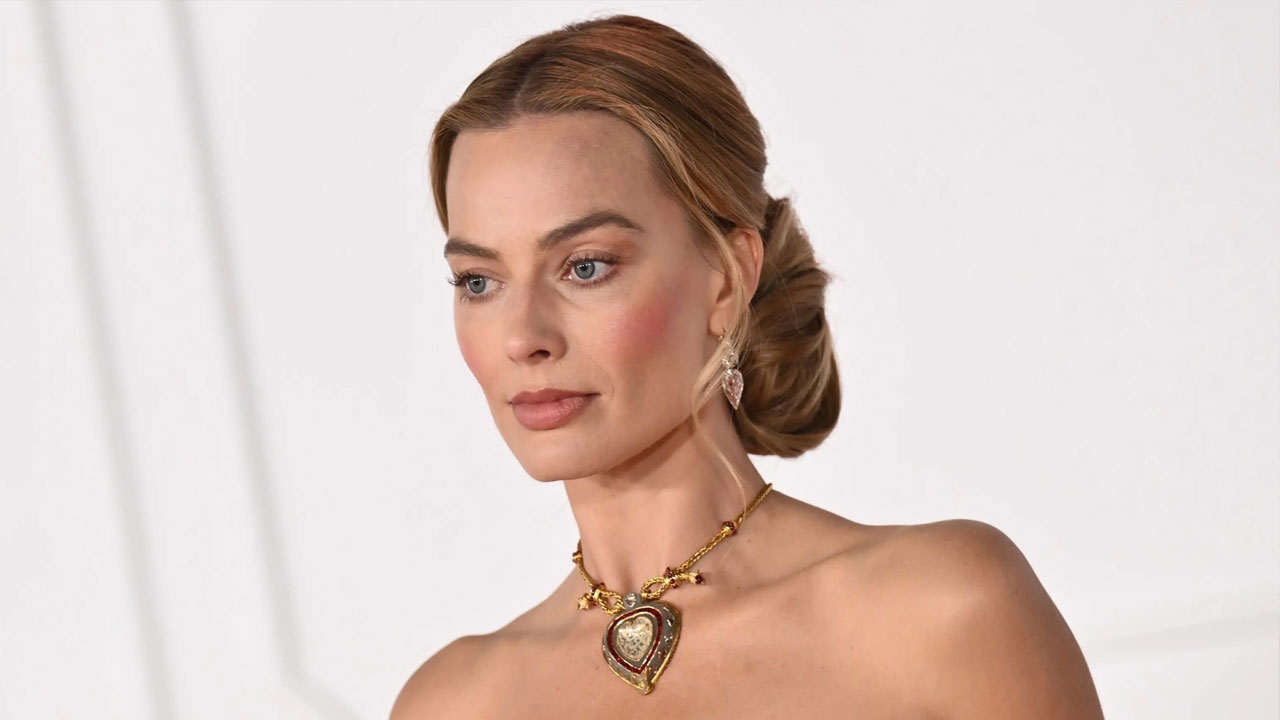
Margot Robbie: Indians have expressed strong outrage on social media after Hollywood actor Margot Robbie appeared wearing a historic necklace at the premiere of Wuthering Heights in Los Angeles. The jewellery piece, widely known as the Taj Mahal necklace, has deep roots in Indian history and has now become the centre of an intense online backlash.
The gold, beetle-leaf–shaped pendant, adorned with rubies and engraved with an inscription in Farsi, drew immediate attention. Speaking to the media, Margot Robbie stated that the necklace once belonged to Elizabeth Taylor and was provided to her by Cartier for the event. However, many in India criticised the omission of the jewel’s original and historically significant origins.
According to reports by The Juggernaut, the necklace was originally gifted to Mughal empress Nur Jahan by her husband Jahangir. It later passed to their son Shah Jahan, who presented it to his wife Mumtaz Mahal, in whose memory the iconic Taj Mahal was built. This lineage is why the jewel is historically referred to as the Taj Mahal necklace.
The inscription on the necklace reportedly bears Nur Jahan’s name, her royal title “Lady of the Padshah,” and references to Jahangir’s 23rd regnal year, dating the piece to around 1627–28 AD. Over time, the necklace left India and eventually reached the United States, where it was purchased by actor Richard Burton as a gift for Elizabeth Taylor. The jewel later re-entered the luxury market and was acquired by Cartier at an auction for approximately $8.8 million.
The reaction on Indian social media has been sharply critical. Several users described the necklace as “stolen heritage,” while others demanded the return of historic Indian jewels. Some comments accused the actor of cultural insensitivity, arguing that referring to the ornament solely as Elizabeth Taylor’s overlooked its original Indian ownership and historical significance.
As debate continues online, the incident has once again reignited discussions around colonial-era artefacts, cultural ownership, and the repatriation of historically significant treasures to their countries of origin.
Post a comment