Tamil Cinema
Gandhi Talks Movie Review: Vijay Sethupathi and Arvind Swami Deliver a Silent Masterpiece
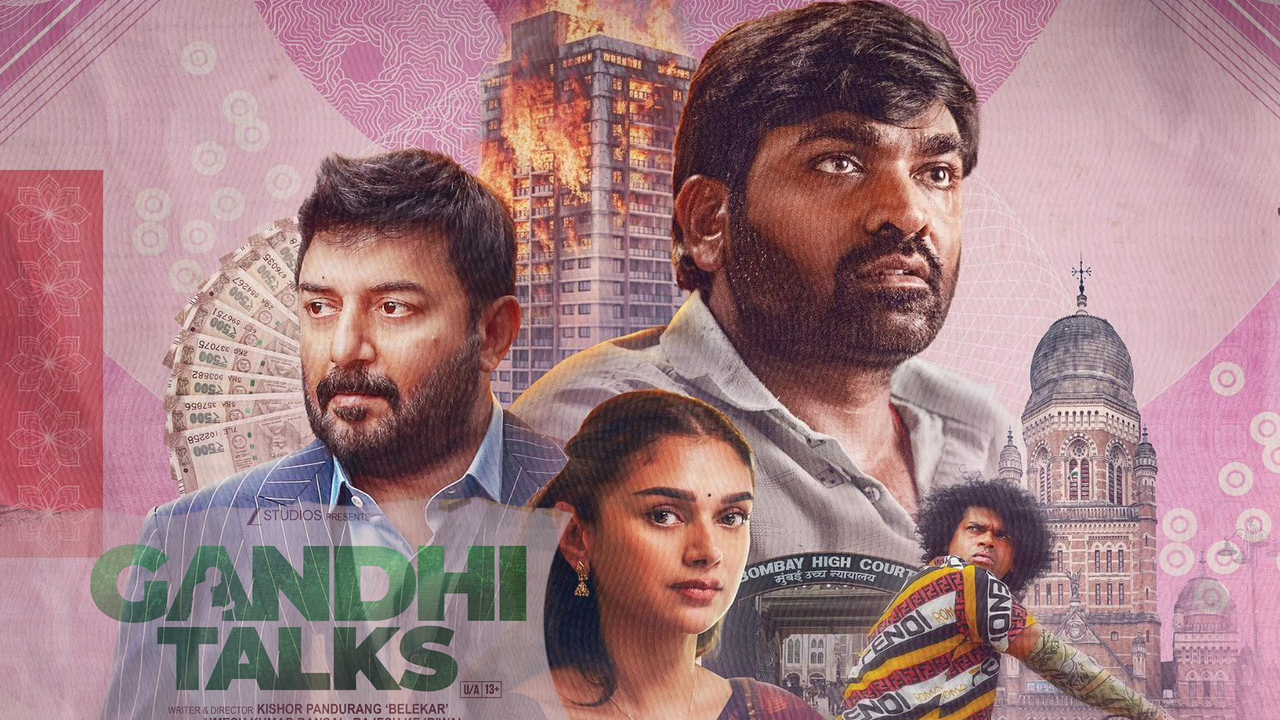
Gandhi Talks Movie Review
Gandhi Talks Movie Review: Cinema was born in silence, long before dialogues and elaborate soundtracks became central to storytelling. Early masters of the medium relied on expressions, visual composition, and emotional depth to communicate meaning. Director Kishore Pandurang Belekar’s Gandhi Talks confidently draws from this tradition, proving that when performances are sincere and storytelling is disciplined, words become optional.
Starring Vijay Sethupathi, Aditi Rao Hydari, and Arvind Swami, Gandhi Talks is a two-hour, dialogue-free film that remains consistently engaging. Rather than feeling experimental or indulgent, the narrative is immersive and contemplative. The film places its trust in the audience, allowing silence to convey emotion, conflict, and moral tension—and that trust is richly rewarded.

Set against the bustling backdrop of Mumbai, one of India’s noisiest cities, the film’s silent approach feels almost defiant. The absence of spoken words turns the city into a space for quiet observation, prompting viewers to reflect on the constant chaos of modern life. As the film progresses, the silence feels calming and introspective, drawing audiences into a meditative cinematic experience.
The title Gandhi Talks carries layered meaning. The familiar phrase “paisa bolta hai” forms the film’s philosophical core, suggesting how money often speaks louder than values. In the film, currency becomes the primary language, with characters literally speaking in “Gandhis.” This symbolic choice highlights how Mahatma Gandhi’s image, once synonymous with integrity and ideals, now represents power, survival, and influence. Beneath this irony lies a subtle Gandhian message: meaningful change begins with personal values and inner conviction.

Money acts as the film’s invisible protagonist, shaping lives across social extremes. Arvind Swami’s character Boseman represents material abundance—a successful career, a loving family, and wealth. However, a series of tragedies and legal troubles dismantle his privileged world, leaving him vulnerable and broken. His gradual downfall is portrayed with quiet intensity and emotional restraint.
In contrast, Vijay Sethupathi’s Mahadev exists at the opposite end of the economic spectrum. Struggling to support his ailing mother and survive day to day, he faces constant humiliation and moral compromise. His love for Aditi Rao Hydari’s character is sincere, but poverty repeatedly stands in the way of stability. As Mahadev navigates corruption and desperation, the film underscores how morality is often tested when survival is at stake.

When the lives of Boseman and Mahadev intersect, Gandhi Talks reveals its sharpest insight: regardless of social status, money governs decisions, values, and consequences. The film explores how even the strongest intentions can falter under pressure, offering a sobering commentary on modern society.
Several moments stand out for their emotional and visual elegance. A tender balcony romance sequence between Mahadev and his lover, culminating in a distant forehead kiss, is both imaginative and deeply moving. Another memorable scene contrasts a novice thief’s misunderstanding of value with a seasoned criminal’s quiet precision, subtly reflecting themes of greed and illusion.
The background score is thoughtfully composed, rising and receding at just the right moments. The use of classic tracks alongside original music adds emotional depth without overwhelming the narrative. Vijay Sethupathi delivers a remarkably nuanced performance, expressing vulnerability, frustration, and hope without a single spoken line. Arvind Swami is equally compelling, while Aditi Rao Hydari brings grace and emotional clarity through restrained expression.

In a time dominated by noise, fast content, and constant digital distractions, Gandhi Talks feels refreshingly radical. It is calming, introspective, and emotionally resonant. While the film may appeal to a niche audience, its originality and courage deserve recognition. Gandhi Talks stands as a reminder that silence, when used thoughtfully, can be the most powerful voice of all.
Post a comment