US trade uncertainty impact
Global economic and trade dynamics are undergoing a significant transformation. The United States, under the leadership of Donald Trump, has adopted a protectionist approach marked by high tariffs, inward-looking policies, and an unpredictable trade stance. As a result, several major economies are now reassessing their dependence on Washington and exploring alternative global partnerships.
At the centre of this strategic shift stands India, increasingly viewed as a stable, reliable, and long-term economic partner. Countries across Europe, Asia, and the Americas are gradually moving away from the traditional Western-centric trade model toward a broader West–East economic alignment, with India playing a balancing role in the evolving global order.
A clear signal of this change is the recent diplomatic outreach by the United Kingdom. British Prime Minister Keir Starmer has embarked on a landmark visit to China, the first by a British leader in eight years, aimed at repairing strained ties and revitalising trade cooperation. During the visit, Starmer is scheduled to meet Chinese President Xi Jinping and Premier Li Keqiang, alongside high-level business engagements in Shanghai. Britain’s renewed engagement with China reflects growing concerns over the reliability of the United States as a long-term economic partner.
Canada, traditionally one of Washington’s closest allies, has also begun recalibrating its foreign and trade policies. Canadian Prime Minister Mark Carney is expected to visit India in early March, a move seen as strategically significant amid recent tensions with the US. Ottawa has made it clear that it intends to significantly expand exports beyond the American market over the next decade, with India and China identified as priority partners.
India’s influence within the Global South is also expanding. Brazilian President Luiz Inacio Lula da Silva is scheduled to visit India in February, accompanied by a large business delegation. The visit underscores how both developed and emerging economies now view India not merely as a consumer market, but as a strategic economic ally with long-term potential.
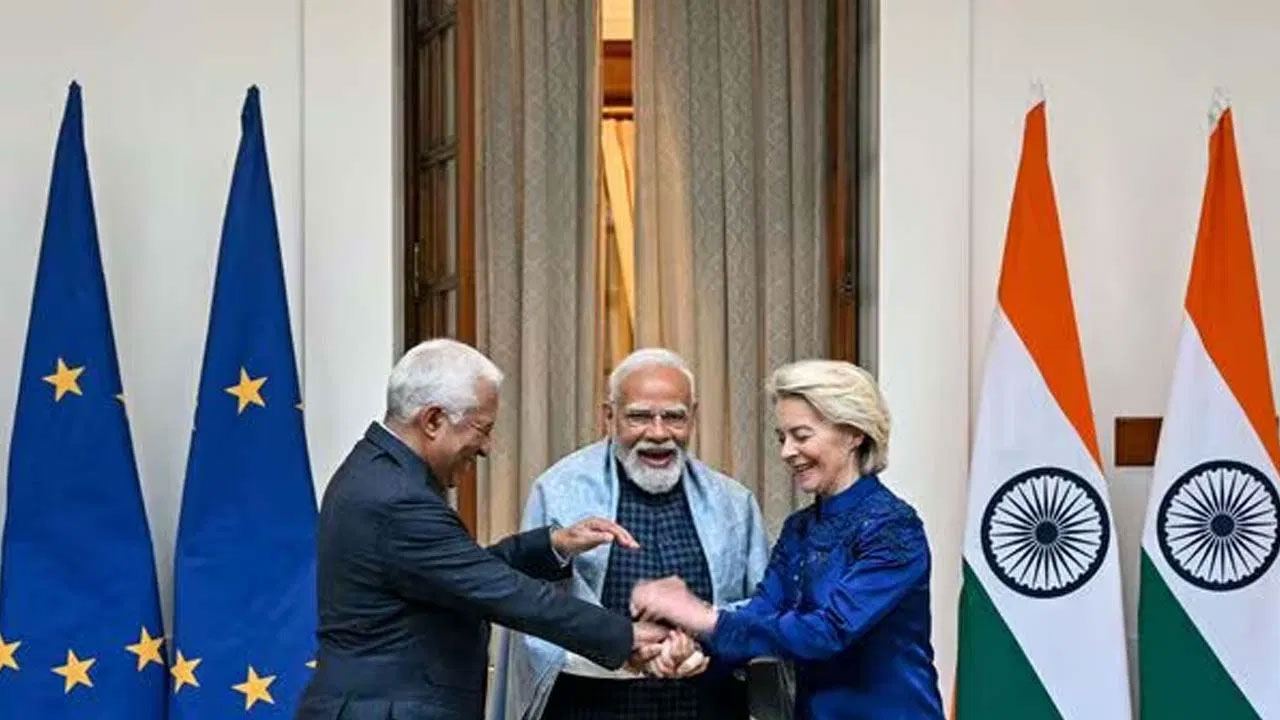
One of the most notable developments highlighting this global shift is the India–European Union Free Trade Agreement signed on January 26, 2026. European Commission President Ursula von der Leyen described it as the “mother of all deals.” Covering nearly a quarter of global GDP and close to two billion people, the agreement will significantly lower trade barriers between the two sides, benefiting a wide range of industries from automobiles and food products to textiles, pharmaceuticals, and technology services.
Meanwhile, concerns have emerged within the United States over these new global alignments. US officials have raised objections to India’s energy purchases from Russia and cautioned Canada over Chinese imports. However, countries appear firm in their pursuit of strategic autonomy. India’s External Affairs Minister S Jaishankar has repeatedly stated that no nation can dictate India’s global partnerships—a stance that increasingly positions India at the heart of the evolving global economic order.







Post a comment