India US Trade Deal Explained
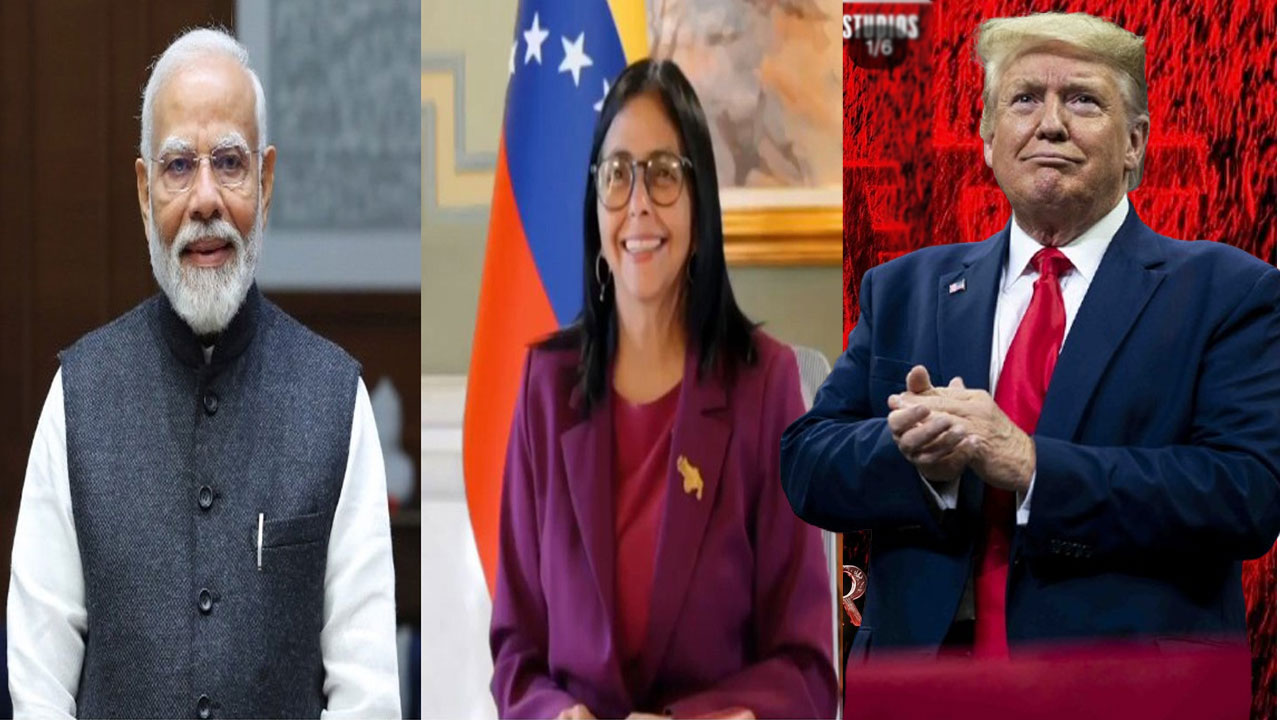
Washington DC, USA: Prime Minister Narendra Modi’s recent phone conversation with Venezuela’s acting president Delcy Rodriguez has drawn renewed attention following the announcement of the India–US trade agreement, as energy sourcing emerged as a central issue in negotiations with Washington.
Over the past year, India–US relations were strained by tariff measures imposed by United States, largely linked to New Delhi’s continued imports of Russian crude oil. Donald Trump repeatedly stated that tariff relief would depend on India reducing its reliance on Russian oil and increasing purchases from alternative suppliers, including the US and Venezuela.
The trade dispute escalated in 2025 when US tariffs on Indian goods rose to 50 percent, including a 25 percent punitive component tied directly to Russian oil imports. India, one of the largest buyers of discounted Russian crude since the Ukraine conflict, defended its position on the grounds of energy security and price stability.
Following a fresh conversation with Prime Minister Modi, President Trump announced that tariffs on Indian exports would be reduced to 18 percent. He claimed that India had agreed to stop buying Russian oil and replace those imports with crude sourced from the US and Venezuela. A White House official later confirmed that the punitive tariff would be withdrawn as part of this understanding.
Prime Minister Modi acknowledged the tariff reduction in a public statement but did not specifically refer to Russian oil or changes in sourcing. However, the timing of his outreach to Venezuela gained significance, as Trump explicitly mentioned the country as a potential alternative supplier.
Venezuelan crude is similar in grade to Russian oil processed by several Indian refineries, making it a technically viable substitute. Analysts, however, caution that supply limitations could restrict the scale of any immediate shift.
After months of deadlock, the latest Modi–Trump call helped break the impasse, with both sides agreeing on a framework for the trade deal. Union minister Ashwini Vaishnaw described the agreement as mutually beneficial, while full details of the trade and energy arrangements are still awaited.
With tariff relief directly linked to oil sourcing, India’s energy diplomacy — including engagement with Venezuela — has played a pivotal role in easing tensions and resetting India–US trade relations.







Post a comment