Russian Oil Imports
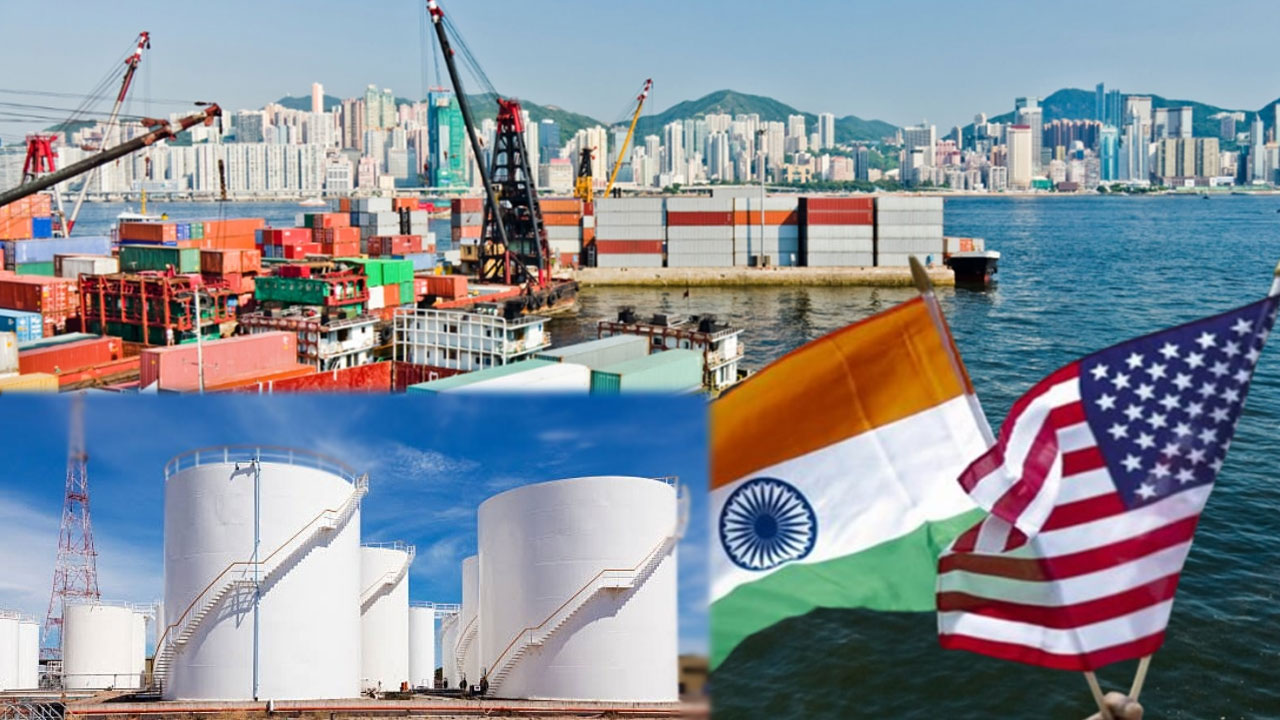
India US Trade Deal: After repeatedly labeling India as a “tariff king” and threatening an additional 25 percent duty linked to Russian oil purchases, US President Donald Trump ultimately settled tariffs on Indian goods at 18 percent, describing it as one of the lowest rates imposed by his administration. Trump stated that India has agreed to halt purchases of Russian crude oil, significantly increase imports from the United States and possibly Venezuela, and commit to buying goods worth $500 billion from the US, including energy, agriculture, coal, and other products under the trade agreement.
India and the United States finalized the long-pending trade pact after months of negotiations. On Monday, Trump announced that US tariffs on India had been reduced “with immediate effect” from 50 percent to 18 percent. This development followed India addressing several American concerns through its Budget proposals and intensifying trade negotiations with other global partners such as the UK and the EU.
Trump highlighted that the agreement reflects a major reset in bilateral trade relations. India had recently increased crude oil imports, which now account for nearly 10 percent of its total oil intake. New Delhi also signed a liquefied petroleum gas agreement under which Indian public sector refiners entered into a one-year contract for LPG imports from the US. In addition, India enacted the Sustainable Harnessing and Advancement of Nuclear Energy for Transforming India (SHANTI) Bill, 2025, allowing private sector participation in nuclear power operations, a long-standing American demand.
Prime Minister Visit to Washington
After months of criticizing India over high tariffs, even before assuming office, Trump and Prime Minister Narendra Modi announced in February the launch of negotiations for a bilateral trade agreement to be concluded by the end of the year. India was among the earliest countries to begin talks with the US, though the final deal was reached after several other nations, including China, had already concluded agreements with Washington.
India’s first move to address Trump’s concerns came even before Modi’s Washington visit. Trump frequently cited India’s high tariffs as a reason for the struggles of American companies like Harley Davidson in the Indian market. In response, India reduced import duties on more than two dozen items in the Union Budget, including cutting tariffs on motorcycles with engine capacities above 1,600cc from 50 percent to 30 percent.
Just days before the Prime Minister’s visit, the government also reduced import duties on bourbon whisky from 150 percent to 50 percent. The US is the largest producer of bourbon. However, domestic manufacturers opposed the sharp reduction and demanded a gradual cut spread over a decade.
Agricultural Tariff Concerns
Shortly after releasing a report on global non-tariff barriers, including those faced in India, the US announced a 27 percent “reciprocal” tariff on Indian goods on April 3. The United States Trade Representative report criticized India’s high applied tariffs across various sectors such as vegetable oils, apples, maize, automobiles, motorcycles, flowers, natural rubber, coffee, raisins, walnuts, and alcoholic beverages.
The report also raised concerns over India’s import regulations on dairy, pork, and fish products, stating that requirements for GM-free certification lacked scientific or risk-based justification. It further reiterated American objections to India’s agricultural subsidy programs, which Washington argues distort global markets.
Despite the 27 percent tariff, India appeared to remain relatively favored compared to other Asian economies. The US imposed tariffs of 54 percent on China, 46 percent on Vietnam, 37 percent on Bangladesh, and 36 percent on Thailand. Indonesia faced a 19 percent duty, while Laos was hit with 48 percent. However, India’s tariff rate exceeded those applied to Japan at 24 percent and South Korea at 25 percent. Duties stood at 20 percent for the EU and 10 percent for the UK.
Ninety-Day Tariff Pause
When the US temporarily suspended the implementation of its “liberation day” tariffs for 90 days, expectations rose that New Delhi would use the window to finalize a deal and attract investment while diversifying supply chains away from China. Instead, the pause marked the beginning of renewed friction that eventually led to India facing some of the steepest tariffs imposed by Washington.
Following a terrorist attack by Pakistan-based group The Resistance Front in Pahalgam, India launched Operation Sindoor on May 7 and 8, 2025, targeting terrorist infrastructure in Pakistan. Pakistan’s Director General of Military Operations contacted the Indian DGMO, and both sides agreed to halt all military activity across land, air, and sea starting at 5:00 pm IST on May 10, 2025.
The Trump administration later claimed that US tariff pressure played a role in stopping the conflict. On May 23, US officials defended the use of emergency powers to impose broad tariffs before the US Court of International Trade, arguing that removing these powers would disrupt ongoing trade negotiations and jeopardize the ceasefire between India and Pakistan.
Strain in India-US Relations
Despite repeated claims by Trump that American tariffs led to the India-Pakistan ceasefire, New Delhi maintained that the truce followed direct communication initiated by Pakistan’s military leadership. While Pakistan nominated Trump for the Nobel Peace Prize, India chose not to participate in such recognition.
As the US continued to finalize trade agreements with partners including the EU, Japan, and Vietnam, negotiations with India stalled, largely over American demands for greater access to India’s agricultural markets. Increasing pressure, Trump doubled tariffs on Indian goods to 50 percent on August 7.







Post a comment