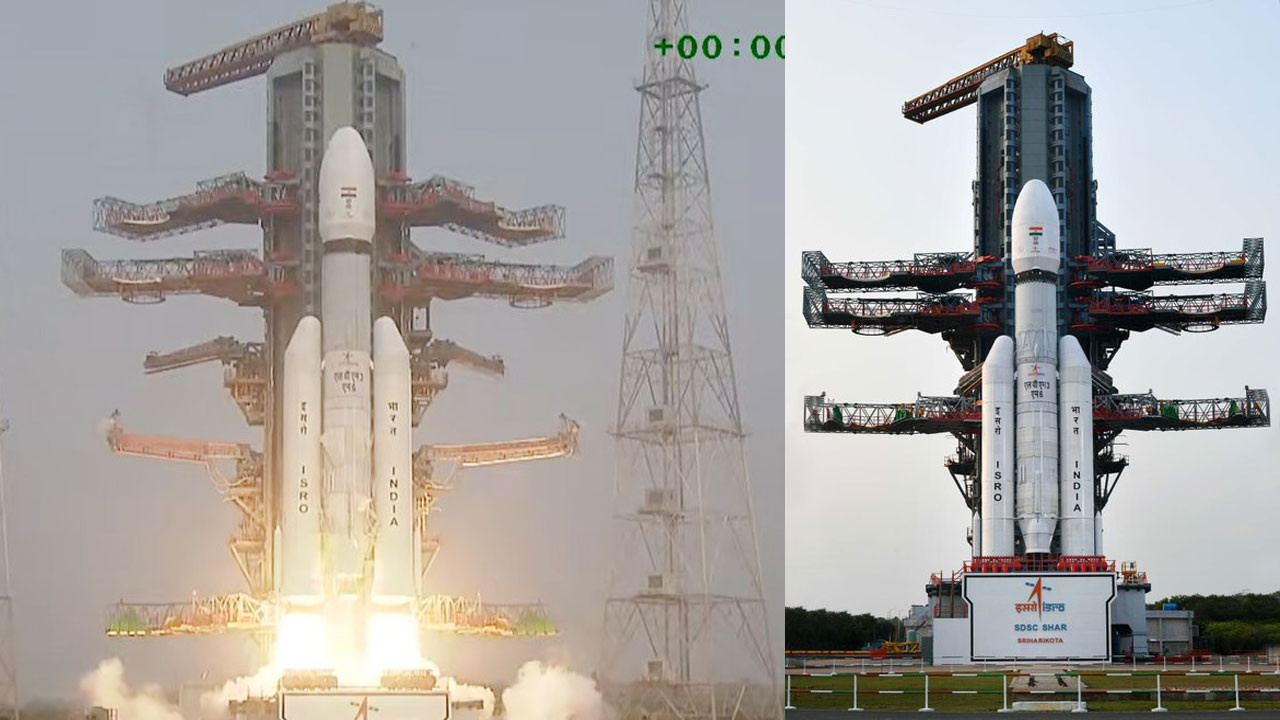
ISRO BlueBird-2 Launch
Sriharikota, Andhra Pradesh, India: The mission holds major importance as the BlueBird Block-2 satellite, with a mass of 6,100 kg, has become the heaviest payload ever deployed into Low Earth Orbit (LEO) by ISRO’s LVM3 launch vehicle.
On Wednesday, the Indian Space Research Organisation (ISRO) successfully launched the BlueBird Block-2 satellite, developed by US-based AST SpaceMobile, using its heavy-lift rocket LVM3-M6, popularly known as the “Baahubali” launcher. The event is being viewed as a landmark achievement in ISRO’s expanding commercial space initiatives. The spacecraft was launched at 8:55 am from the Satish Dhawan Space Centre located in Sriharikota, Andhra Pradesh.
This mission further strengthens ISRO’s capabilities, as the 6,100 kg BlueBird Block-2 now stands as the largest payload ever carried by the LVM3 rocket into LEO.
Prime Minister and Union Minister Praise ISRO Achievement
Prime Minister Narendra Modi welcomed the successful launch, stating that it demonstrates India’s commitment toward building a self-reliant nation.
In a message shared on X, the Prime Minister said the LVM3-M6 mission represents a major advancement in India’s space sector. He highlighted that deploying the heaviest satellite ever launched from Indian territory into its designated orbit is a proud moment for the country’s space journey. He also emphasized that the achievement aligns with the vision of an Aatmanirbhar Bharat and congratulated ISRO’s scientists and engineers for their dedication.
Union Minister of State (Independent Charge) for Science and Technology Jitendra Singh also applauded the ISRO team, stating that the organization continues to register repeated successes in space technology.
In his post on X, he praised the successful LVM3-M6 launch carrying BlueBird Block-2 and credited the consistent progress to strong leadership and a clear vision, reinforcing India’s growing strength in the global space arena.
Why the BlueBird Block-2 Launch Matters
This mission is being executed under a commercial partnership between ISRO’s commercial subsidiary NewSpace India Limited (NSIL) and AST SpaceMobile, also known as AST and Science LLC.
Weighing 6,100 kg, BlueBird Block-2 has surpassed ISRO’s previous payload record, which was held by the LVM3-M5 Communication Satellite-03 at approximately 4,400 kg. That satellite was launched into Geosynchronous Transfer Orbit (GTO) on November 2.
Beyond its weight milestone, the mission is designed to enable direct high-speed cellular broadband connectivity to smartphones worldwide through next-generation satellite technology.
AST SpaceMobile is working on the world’s first space-based cellular broadband system that connects directly with standard mobile phones. This network is intended to serve both commercial and government users, supporting 4G and 5G voice calls, video communication, messaging, streaming, and data services across global regions.
Key Facts About ISRO’s LVM3 Launch Vehicle
Standing 43.5 metres tall, the LVM3, also referred to as the Geosynchronous Satellite Launch Vehicle (GSLV) Mk III, is a three-stage rocket. It is powered by a cryogenic engine developed by ISRO’s Liquid Propulsion Systems Centre.
The rocket is equipped with two S200 solid strap-on boosters that generate the immense thrust required during lift-off. These boosters were developed at the Vikram Sarabhai Space Centre in Thiruvananthapuram.
In earlier missions, the LVM3 has successfully carried major payloads including Chandrayaan-2, Chandrayaan-3, and two OneWeb missions, collectively deploying 72 satellites into orbit.
December 24, 2025









Post a comment