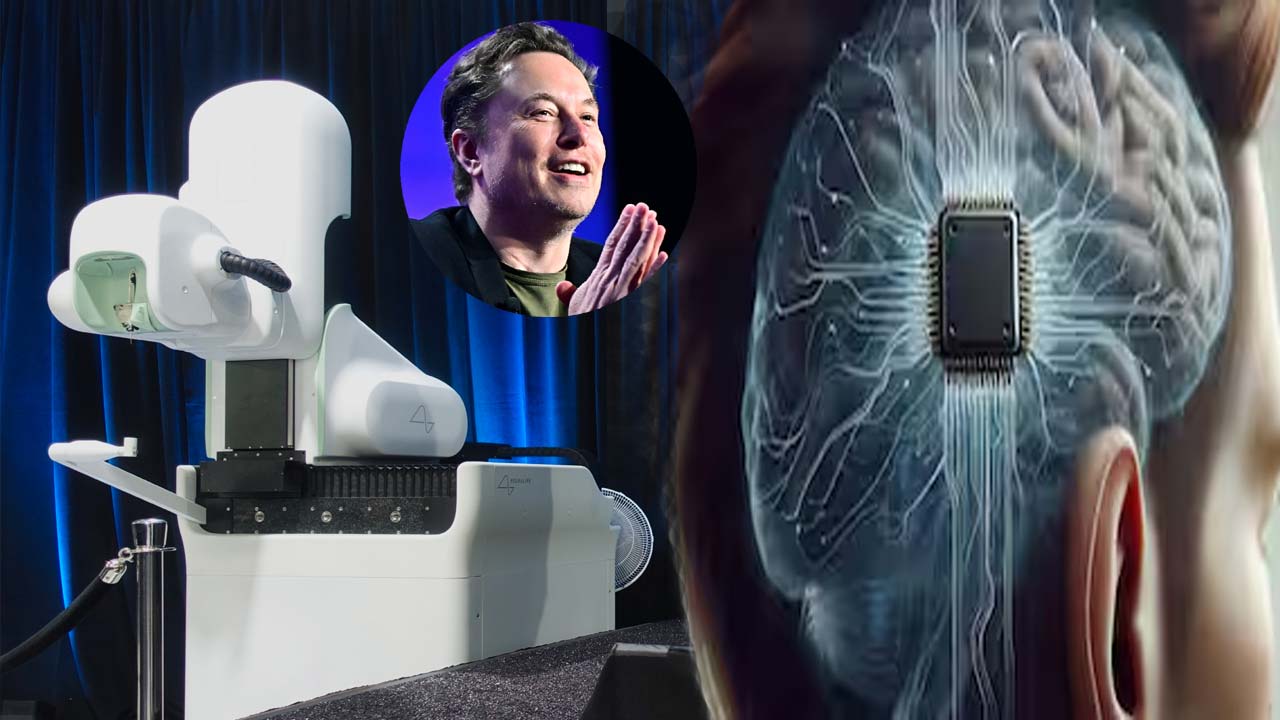
Elon Musk Second Neuralink Success
Washington: Progress in implanting an electronic chip in the human brain has advanced further. Neuralink CEO Elon Musk revealed that a second person has now been implanted with the chip. This device aims to assist those with back and brain-related issues.
Musk revealed that the chip implanted in the second person contains nearly 400 active electrodes. He did not provide details on when the surgery took place but confirmed that eight more individuals will receive the chip by the end of the year as part of clinical trials. He revealed this information while participating in a podcast.
The same event featured Noland Arbag, the first person to receive the chip, along with three top Neuralink executives. Arbag described the chip installation procedure and the robot-assisted surgery. Before the chip was implanted, he had to use a special stick with his mouth to operate a tablet, but this is no longer necessary.
Initially, Arbag encountered some issues with the chip, including some electrodes coming out of the brain. Neuralink identified and resolved these defects early on. Musk mentioned that Arbag has now set a record in computer operation using the chip.
In January, Neuralink announced the successful implantation of the first brain chip. Last May, the US Food and Drug Administration (FDA) approved the Brain-Computer Interface (BCI) experiments, enabling direct coordination between the human brain and a computer. The Neuralink chip had earlier been successfully tested on pigs and monkeys. According to the company's experts, the device has proven to be highly secure and reliable. A monkey even played a video game of 'Pong' using the chip.
How does it work?
The Neuralink Brain-Computer Interface (BCI) features an N1 chip, which is 8 millimeters in diameter and equipped with thin electrodes, each 20 times thinner than a human hair. A small part of the skull is removed to place the N1 device, and the chip's electrodes are inserted into the brain near critical areas. Each chip has over three thousand electrodes that are soft and bendable, detecting signals transmitted between neurons and sending them to the chip. TThese electrodes track the activity of a thousand neurons each. Up to ten chips can be implanted in one person. Once installed, the BCI sends, receives, and stimulates electrical signals from the brain, converting them into algorithms that computers can analyze.








Post a comment