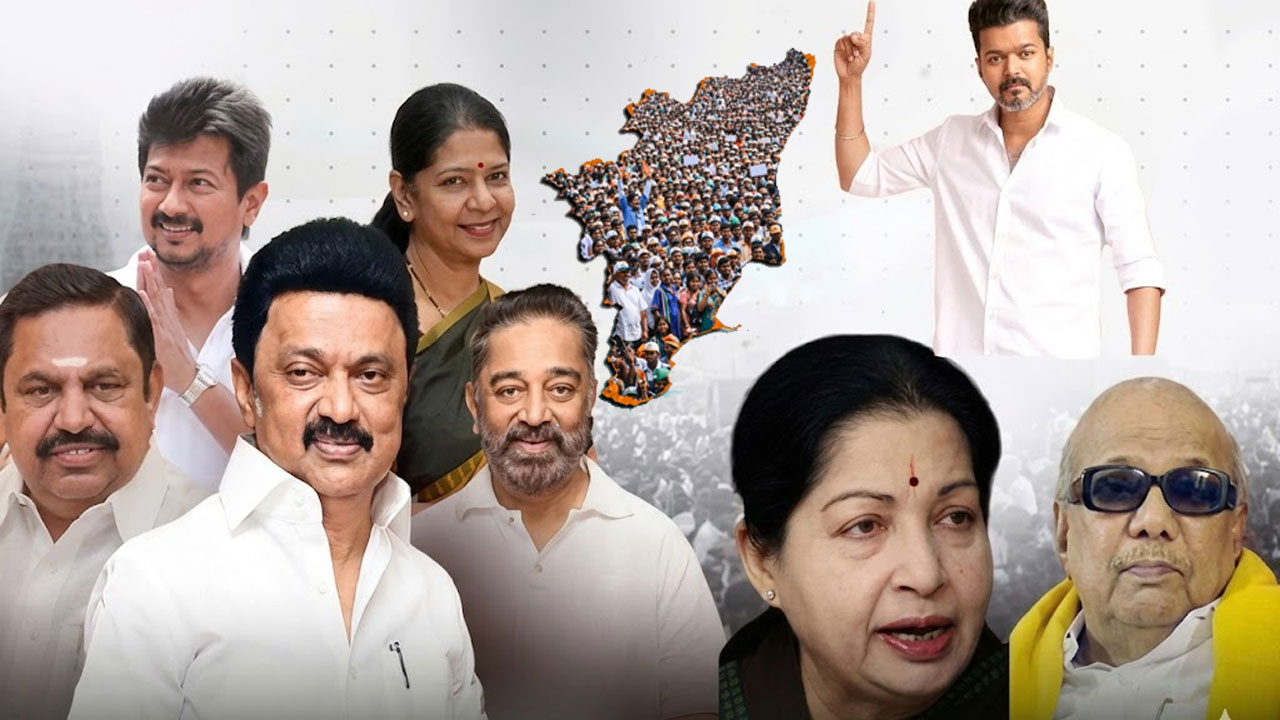
Tamil Nadu election history timeline from 1952 to 2021
Tamil Nadu’s political landscape has undergone significant transformation over the decades, shaped largely by influential leaders and evolving voter preferences. Earlier, the state’s politics were closely associated with towering personalities such as M. Karunanidhi and J. Jayalalithaa, who dominated electoral outcomes for years. However, the 2021 Assembly elections marked a turning point, as they were conducted in the absence of both leaders. The Dravida Munnetra Kazhagam (DMK) emerged victorious, signaling a shift in political dynamics.
As Tamil Nadu prepares for future elections, political activity has intensified. The ruling DMK is working to consolidate its position, while the opposition AIADMK is implementing strategic measures to regain influence. Electoral outcomes in the state have historically depended on multiple factors, including public sentiment, alliances, and the role of smaller political parties.
Historical Overview of Elections (1952–2021)
1952–1962:
In the initial years, the Indian National Congress dominated elections, benefiting from its prominent role in India’s independence movement. However, by 1957 and 1962, the DMK had emerged as a formidable challenger.
1967–1977:
The 1967 elections marked a major political shift, with strong anti-Congress sentiment and economic challenges, such as rising food prices, aiding the DMK’s victory. The party retained power in 1971. Later, a split within the DMK and the rising popularity of M. G. Ramachandran led to a decisive win for the AIADMK in 1977.
1980s–1990s:
During this period, leadership appeal and coalition strategies played a crucial role. The AIADMK secured victories in 1980 and 1984, while the DMK returned to power in 1989. The 1991 elections were heavily influenced by the assassination of Rajiv Gandhi, resulting in a strong emotional wave that favored the AIADMK under Jayalalithaa. In 1996, the DMK achieved a landslide victory.
2001–2011:
Elections in this phase were shaped by alliance formations, allegations of corruption, and leadership challenges, leading to alternating victories between major parties.
2016–2021:
In 2016, the AIADMK retained power with a narrow vote margin. By 2021, the political environment had changed significantly following the passing of Jayalalithaa and Karunanidhi, paving the way for a decisive victory by the DMK alliance.
Key Factors Influencing Election Outcomes
- Public Sentiment: Anti-incumbency often plays a decisive role.
- Leadership Influence: Charismatic leaders significantly impact voter behavior.
- Alliance Strength: Coalition partnerships can determine final results.
- Role of Smaller Parties: Minor parties often influence vote shares.
- Major Events & Economy: Economic conditions and significant incidents shape voter opinion.







Post a comment