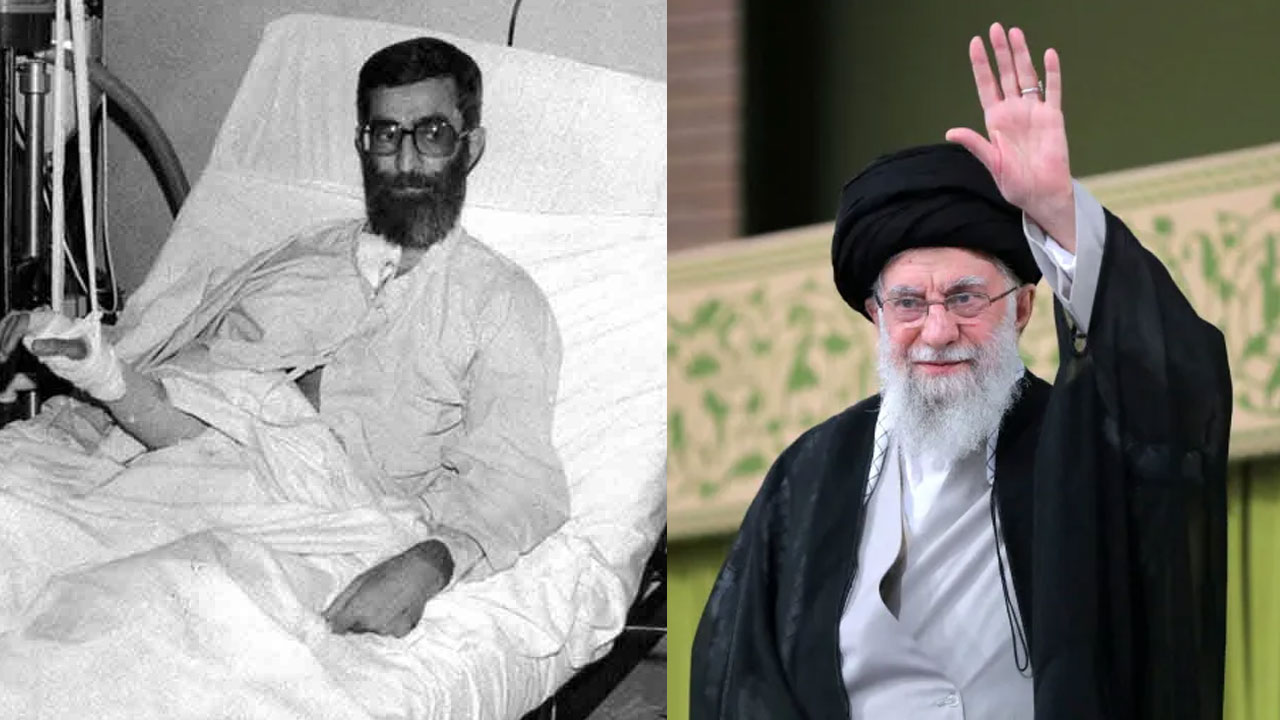
Ayatollah Ali Khamenei
In a dramatic escalation of tensions in West Asia, Iran’s Supreme Leader Ayatollah Ali Khamenei has reportedly been killed in coordinated airstrikes carried out by Israel and the United States. The large-scale bombardment targeted nearly 30 locations across Tehran on Saturday, with Iranian leadership figures said to be the primary focus of the attacks. According to reports, Khamenei’s daughter, son-in-law, and grandson were also killed in the strikes.
In response to the Supreme Leader’s death, Iran has announced 40 days of national mourning along with a seven-day complete public holiday. As a symbolic gesture of grief and resistance, a red flag - often associated with martyrdom and calls for justice - was hoisted atop the revered Jamkaran Mosque in Qom, a city considered deeply sacred by millions of Iranians.
Ayatollah Ali Khamenei's Biography and Legacy
Ayatollah Ali Khamenei, the long-time Supreme Leader of the Islamic Republic of Iran, has reportedly been killed in a major joint airstrike by the United States and Israel, marking a seismic moment in global geopolitics.
Born April 19, 1939 in the sacred Iranian city of Mashhad, Khamenei came from a religious family and was educated in Shiite seminaries, where he later became a prominent cleric and political figure opposing the Western-aligned monarchy of the Shah.
From Surviving Assassination to a Violent End
Khamenei’s death marks a historic and tragic end to a life that had previously survived a deadly assassination attempt more than four decades ago. In 1981, eight years before he became Iran’s Supreme Leader, Khamenei - then serving as President - narrowly escaped death in a bombing during the Iran–Iraq war.
On June 27, 1981, Khamenei had visited a mosque to offer prayers and later addressed followers, answering their questions. During the interaction, a young man reportedly placed a tape recorder on the desk near him and pressed a button. Moments later, the device emitted a whistle before exploding with a powerful blast.
The explosion left Khamenei critically injured. It took months for him to recover. His right arm was permanently paralyzed, and he also suffered severe damage to his vocal cords and lungs. Though many of his injuries healed over time, his right hand remained immobile for the rest of his life — often concealed behind his coat during public appearances.
Having survived an assassination plot early in his political career, Khamenei ultimately met his end in one of the most significant military strikes in the region’s recent history. His death is expected to have profound geopolitical consequences, potentially reshaping power dynamics across the Middle East.








Post a comment