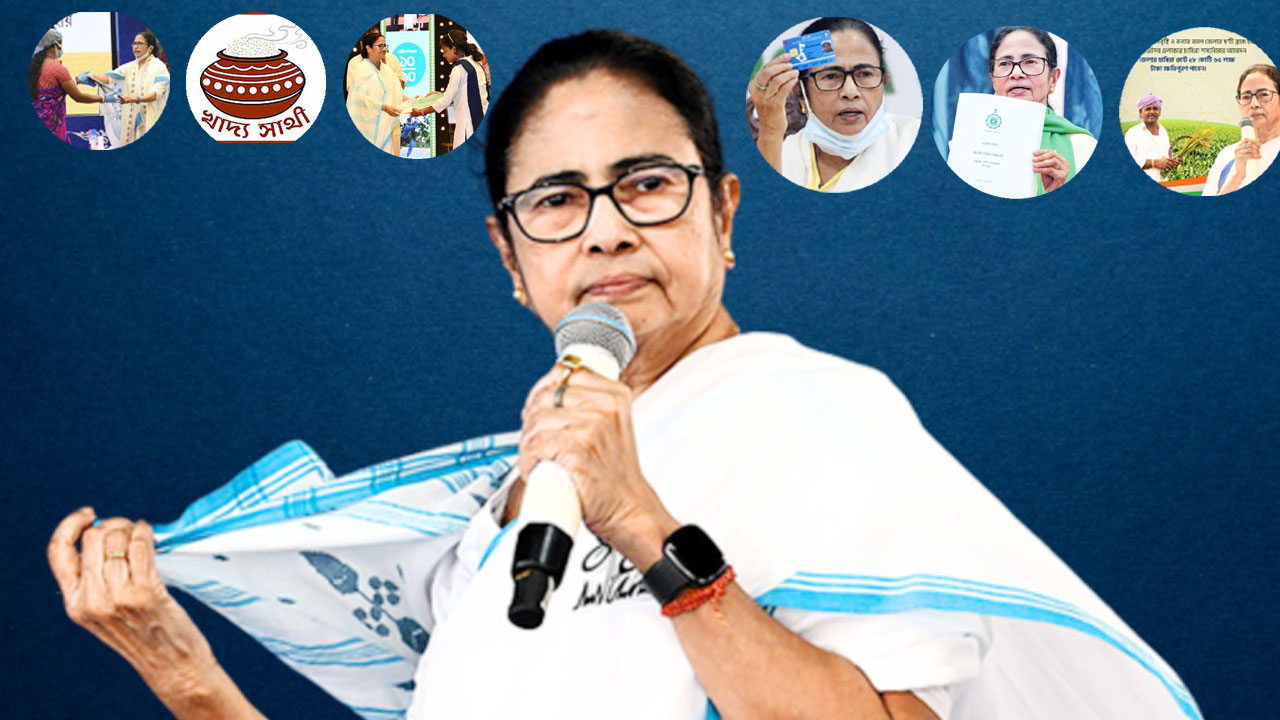
Mamata Banerjee addressing public on welfare schemes in West Bengal
Mamata Banerjee, known for her strong political resolve and grassroots connection, continues to consolidate her position as a dominant force in West Bengal politics. Over the years, her governance approach—popularly referred to as the ‘Didi Model’—has evolved into a welfare-centric framework aimed at strengthening public support.
Her administration has consistently focused on social welfare, direct benefit transfers, and maintaining close engagement with citizens. These initiatives have played a crucial role in securing three consecutive electoral victories and are now being expanded further as the state approaches another election cycle.
Focus on Rural Economic Strengthening
A key pillar of the ‘Didi Model’ lies in boosting the rural economy through welfare-driven policies. By linking social schemes with economic participation, the government has created a support structure that benefits marginalized and economically weaker sections.
Lakshmir Bhandar: Financial Support for Women
Launched in 2021, the Lakshmir Bhandar scheme provides monthly financial assistance to nearly 2.2 crore women aged between 25 and 60 years. Beneficiaries receive ₹1,000 per month, while women from SC/ST communities receive ₹1,200.
The scheme is widely regarded as one of the most impactful welfare initiatives in the state. The ruling All India Trinamool Congress has also pledged to increase the assistance amount if re-elected.
Khadya Sathi: Strengthening Food Security
The Khadya Sathi scheme, introduced in 2016, ensures subsidized food grains for nearly 9 crore residents. Under this initiative, rice and wheat are provided at ₹2 per kilogram to economically vulnerable groups, including landless laborers, marginal farmers, and low-income households.
Kanyashree Prakalpa: Promoting Girls’ Education
To encourage education among girls, the government launched the Kanyashree Prakalpa scheme in 2013. Girls aged 13 to 18 receive annual financial support of ₹1,000, along with a one-time grant of ₹25,000 for continuing education beyond 18.
The scheme has benefited over 7 crore girls and has received global recognition, including the United Nations Public Service Award.
Swasthya Sathi: Expanding Healthcare Access
Through the Swasthya Sathi scheme, launched in 2016, the state government provides health insurance coverage of up to ₹5 lakh per family. The program currently covers around 9 crore people across 2.5 crore families.
More than one crore individuals have availed treatment under this initiative, with the government allocating approximately ₹13,000 crore toward healthcare support.
Youth Support: Banglar Yuva Saathi
In a move to address unemployment, the government has introduced the Banglar Yuva Saathi scheme. Under this program, unemployed youth aged between 21 and 40 years receive ₹1,500 per month for up to five years or until they secure employment.
Political Outlook
With an expanded welfare framework and continued focus on inclusive governance, Mamata Banerjee is aiming to reinforce her electoral prospects once again. The ‘Didi Model’ remains central to her political strategy, combining welfare delivery with strong grassroots engagement.








Post a comment