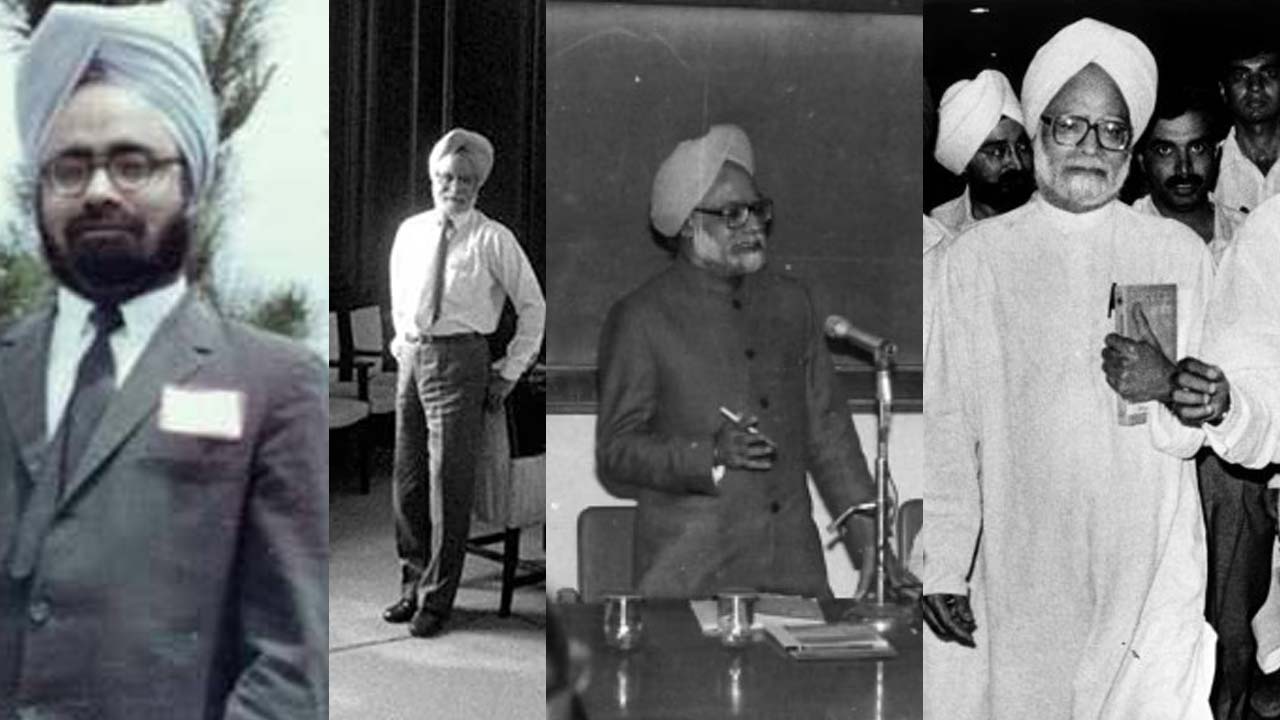
Biography and History of Former Prime Minister Manmohan Singh
Early Life and Education
Manmohan Singh was born on September 26, 1932, in Gah, a small village in the Punjab Province of British India (now in Pakistan). Following the partition of India in 1947, his family migrated to Amritsar, India. Singh displayed exceptional academic brilliance, earning a bachelor's degree in economics from Punjab University in 1952. He further pursued higher education at Cambridge University, obtaining a first-class honors degree in economics, and later completed a doctorate in economics from Nuffield College, Oxford University in 1962.
Academic and Professional Career
Before entering politics, Singh had a distinguished academic and professional career:
- He taught at Punjab University and later worked at the Delhi School of Economics.
- In the 1970s, he held key positions such as Chief Economic Advisor (1972-1976), Governor of the Reserve Bank of India (1982-1985), and Deputy Chairman of the Planning Commission.
Political Career
Manmohan Singh's entry into politics came when he was appointed Finance Minister in 1991 by Prime Minister P.V. Narasimha Rao. During a severe economic crisis, Singh introduced economic liberalization reforms, which deregulated markets, reduced trade barriers, and invited foreign investment, steering India onto the path of rapid economic growth.
Prime Ministerial Tenure (2004–2014)
Manmohan Singh became the 13th Prime Minister of India in 2004, making history as the country's first Sikh Prime Minister. His tenure is remembered for several key achievements:
1. Economic Growth: India experienced high GDP growth rates during his administration, particularly in his first term.
2. India-US Nuclear Deal: Singh signed a landmark civil nuclear agreement with the United States in 2008, enhancing India's global standing.
3. Welfare Schemes: His government launched initiatives such as the National Rural Employment Guarantee Act (NREGA) and the Right to Education Act.
However, his second term was marred by corruption scandals, including the 2G spectrum scam and the Coal Allocation scam, which dented the Congress Party's image.
Legacy and Contributions
Singh is widely recognized for transforming India's economy through his visionary policies. A soft-spoken and modest leader, he maintained a reputation for personal integrity despite the controversies surrounding his government. His leadership style often emphasized consensus and quiet diplomacy.
Post-Premiership Years
After stepping down as Prime Minister in 2014, Singh continued to serve as a senior leader in the Congress Party and a member of the Rajya Sabha. He occasionally voiced opinions on economic and political issues but largely maintained a low profile.
Personal Life
Manmohan Singh was married to Gursharan Kaur, and the couple has three daughters. Known for his humility and intellect, Singh's personal life was as unassuming as his public demeanor.
Honors and Recognition
- Singh has received numerous awards, including the Padma Vibhushan in 1987 for his contributions to public service.
- He is often credited as the "architect of India's economic reforms."
Death
Dr. Manmohan Singh passed away on December 26, 2024, at the age of 92, marking the end of an era. His death was widely mourned across India and globally, with tributes highlighting his profound impact on the nation's economic and political landscape.
His legacy as a reformer, economist, and statesman continues to inspire future generations.









Post a comment