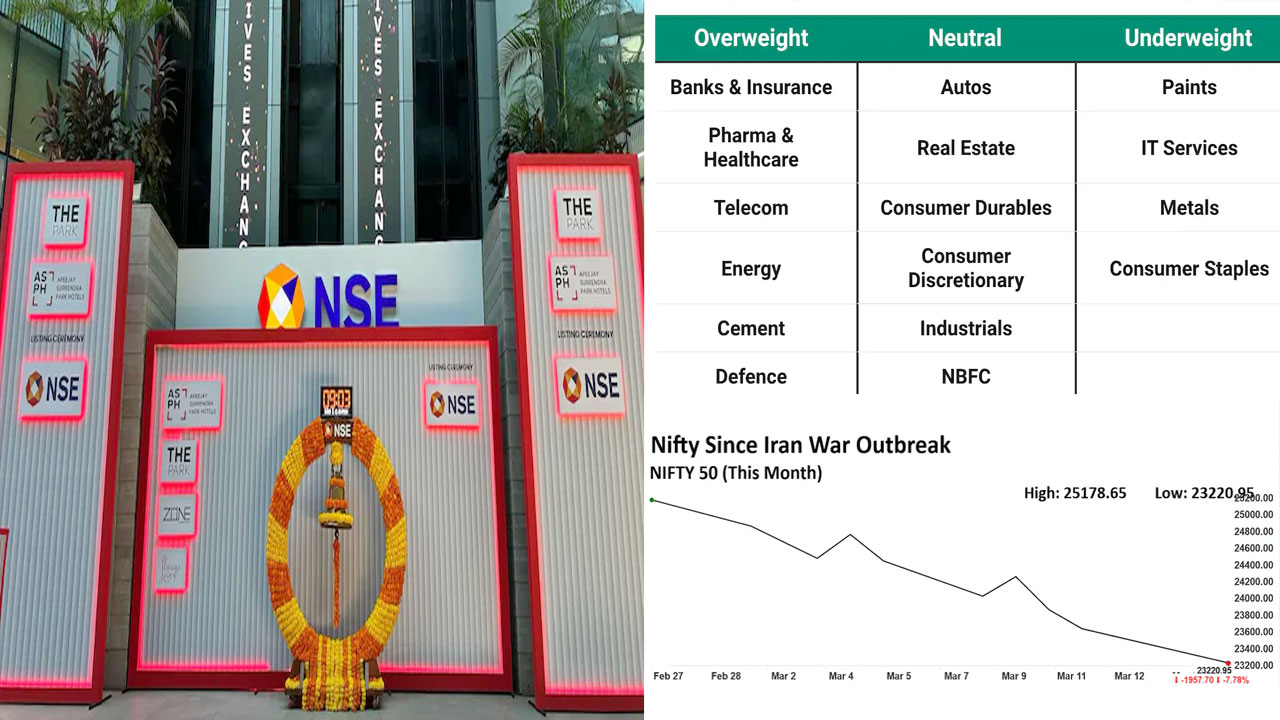
Citi Reduces Nifty 2026 Target to 27,000
Mumbai, India: Global brokerage firm Citi has reduced its year-end target for India’s benchmark Nifty 50 index to 27,000, down from its earlier projection of 28,500, citing potential risks to corporate earnings in fiscal year 2027 due to geopolitical tensions and rising energy prices.
Despite the downgrade, Citi noted that the revised projection still implies around 17% upside from the index’s previous closing level.
In its latest strategy note, analysts Samiran Chakraborty and Surendra Goyal also revised their sector outlook. The brokerage downgraded the automobile sector to “neutral” from “overweight”, highlighting concerns about higher oil and gas prices as well as possible semiconductor supply disruptions.
As part of its portfolio changes, Citi removed Mahindra & Mahindra Ltd. from its top large-cap picks, while Mahanagar Gas Ltd. was dropped from its mid-cap selection list.
Meanwhile, Bloomberg data shows that the average 12-month Nifty target among analysts stands near 29,800, suggesting a potential upside of roughly 28%.
Impact of Middle East Conflict
Citi’s macroeconomic assessment indicates that escalating tensions in the Middle East could affect India’s economy through multiple channels. The brokerage estimates a 20–30 basis point downside risk to FY27 GDP growth, while forecasting a 50–75 basis point increase in inflation due to higher energy costs.
The report also highlighted a 0.1 percentage point rise in the Centre’s fiscal deficit and a potential $25 billion increase in the current account deficit.
According to Citi, the impact is expected to come primarily from higher oil prices and possible supply disruptions in LPG and natural gas. Energy-intensive sectors such as fertilizers, chemicals, and transportation could face direct pressure due to increased input costs.
Additionally, limited availability of LPG and gas could impact consumer-facing sectors like quick service restaurants (QSRs), food delivery platforms, and MSME manufacturing units, as well as industries linked to petrochemicals.
Sector-Specific Exposure
The brokerage also pointed out that the Middle East remains an important export market for India’s automobile industry. Certain consumer discretionary segments, including jewellery companies, also have a notable presence in the region.
Infrastructure and engineering firms such as Larsen & Toubro Ltd. and Voltas Ltd. have sizeable order books linked to Middle Eastern projects, while consumer goods companies including Dabur India Ltd., Emami Ltd., and Marico Ltd. derive part of their revenue from the region.
The aviation and tourism industries could also experience disruptions, particularly in international travel routes passing through the Middle East.
Citi further warned that there could be secondary effects on financial services, defence manufacturing, and IT services, depending on how the geopolitical situation evolves.
Market Performance
Analysts added that Indian equities have already underperformed broader emerging markets since the beginning of 2025, leading to a moderation in valuation premiums compared with other emerging economies.









Post a comment