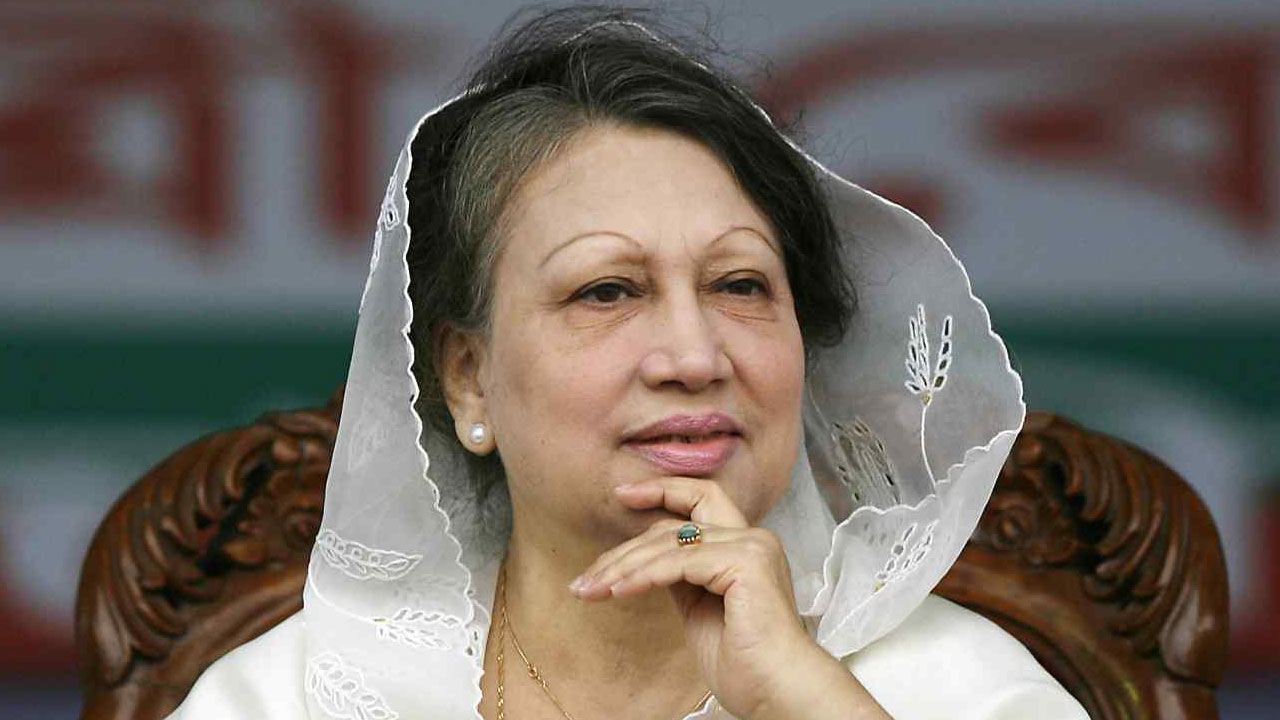
Bangladesh first woman prime minister Khaleda Zia
Dhaka, Bangladesh: Khaleda Zia, Bangladesh’s first woman prime minister and one of the nation’s most influential political leaders, passed away on Tuesday, December 30, 2025, following several days of illness. She was 80 years old. Her political party confirmed her death through a social media statement, saying she breathed her last at around 6 am shortly after the morning Fajr prayers.
“We seek mercy for her soul and urge everyone to remember her in their prayers,” the Bangladesh Nationalist Party said in a message shared on its official Facebook page.
Zia created history in 1991 by becoming the first female head of government in Bangladesh. She later served a second term as prime minister from 2001 to 2006, playing a defining role in the country’s post-military political landscape.
Early Life and Entry Into Politics
Born in Jalpaiguri, which was part of the undivided Dinajpur district during British India, Khaleda Zia was the daughter of Iskandar and Taiyaba Majumder. Her rise to national leadership came after the return of parliamentary democracy, when she assumed office as prime minister in 1991. She would later govern the country again between 2001 and 2006.
She is survived by her elder son, Tarique Rahman, his wife Zubaida Rahman, and their daughter Zaima Rahman. Tarique returned to Bangladesh on December 25 after spending 17 years abroad and currently serves as the acting chairman of the Bangladesh Nationalist Party. He is widely viewed as a leading contender in the upcoming national elections. Her younger son, Arafat Rahman Koko, died several years ago while in Malaysia.
Zia’s political career began under tragic circumstances. She entered public life following the killing of her husband, Ziaur Rahman, who served as Bangladesh’s president from 1977 to 1981 and founded the Bangladesh Nationalist Party in 1978. He was assassinated during a military uprising in 1981.
Role in Restoring Democracy
In the years after her husband’s death, Zia emerged as a prominent voice against military rule. She became a central figure in the mass movement opposing the government of military ruler Hussain Muhammad Ershad. That movement ultimately led to Ershad’s removal from power in 1990, paving the way for democratic governance.
Throughout her career, Zia’s principal political opponent was Sheikh Hasina, leader of the Awami League. For decades, the rivalry between the two leaders dominated Bangladesh’s political scene, shaping elections, administrations, and street protests across the country.
Prolonged Health Struggles
Zia had been suffering from serious health issues for many years, with her condition gradually worsening. She frequently traveled overseas for treatment and most recently returned to Dhaka in May after receiving medical care in the United Kingdom.
Doctors quoted by Reuters reported that she was dealing with multiple ailments, including advanced liver cirrhosis, arthritis, diabetes, and complications related to her heart and chest.
Her declining health significantly influenced the final chapter of her political life. In 2018, she was imprisoned following a corruption conviction, which she repeatedly described as politically motivated. In 2020, the Awami League government led by Sheikh Hasina suspended her sentence on medical grounds, placing her under house arrest and restricting her from traveling abroad or engaging in political activities.
Those restrictions were eased only after Hasina was removed from office. In early January this year, Bangladesh’s interim administration permitted Zia to travel overseas for treatment, after her earlier requests had reportedly been denied multiple times.
Legal Battles and Final Acquittal
Despite stepping away from active politics due to illness, Zia continued to face legal challenges. She consistently maintained that the cases filed against her were driven by political motives.
In January 2025, the Supreme Court cleared her in the final pending corruption case. The ruling effectively removed all legal barriers that would have allowed her to contest the general election scheduled for February.






Post a comment