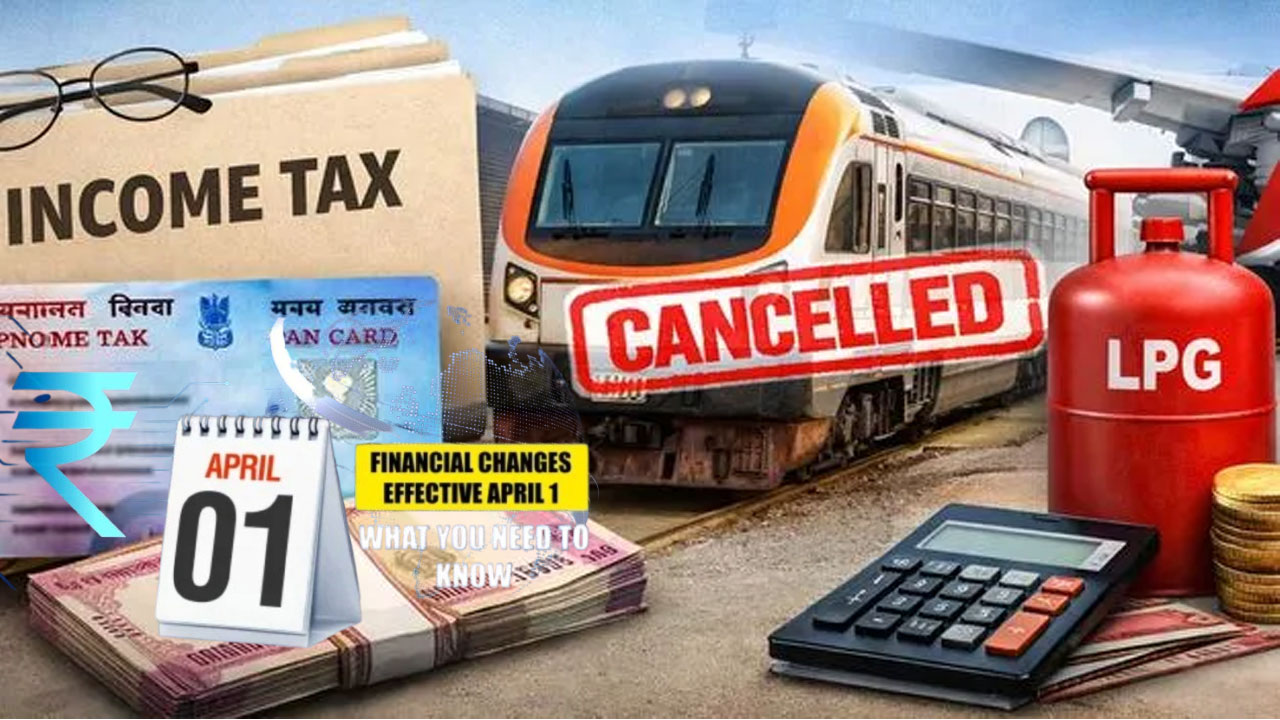
Overview of tax, banking, LPG, and investment changes in India for FY 2026-27
New Delh: India will enter the Financial Year 2026–27 on April 1, bringing into effect a series of significant changes across taxation, banking, and investment sectors. These revisions are expected to have a direct impact on household finances, savings patterns, and long-term investment strategies.
Key Changes Effective from April 1
Income Tax Filing Updates
The new financial year is likely to introduce modifications in the Income Tax Return (ITR) filing framework. Individuals opting for the default new tax regime may benefit from revised provisions aimed at simplifying compliance and enhancing savings.
Credit Card Reward Revisions
- Several banks have updated their credit card reward systems. Transactions such as rent payments and insurance premium payments may now attract lower reward points, reducing overall benefits for users.
Digital Insurance Policies
- In a move towards complete digitisation, all newly issued insurance policies—including life, health, and general insurance—will be available only in electronic format through e-Insurance accounts, ensuring greater security and accessibility.
Mandatory Mutual Fund KYC Compliance
- Investors in mutual funds must ensure that their Know Your Customer (KYC) details are updated. Non-compliant accounts may face restrictions on transactions, impacting investments.
LPG Cylinder Price Revision
- Oil marketing companies will revise LPG cylinder prices as part of their monthly review mechanism. Prices will continue to depend on international fuel rates and market conditions.
Increase in Debit Card Charges
- Certain banks have revised debit card annual maintenance charges, potentially increasing banking expenses for customers from April 1.
Enhanced Security for NPS Accounts
- The National Pension System (NPS) will now incorporate strengthened login security through two-factor authentication (2FA), including Aadhaar-based verification, to safeguard user accounts.
Revision in Small Savings Scheme Rates
- Interest rates for government-backed schemes such as Public Provident Fund (PPF) and Sukanya Samriddhi Yojana will be updated for the upcoming quarter.
FASTag KYC Requirement
- Vehicle owners must complete FASTag KYC to ensure seamless toll payments. Accounts without updated KYC may face deactivation, leading to inconvenience during travel.
Increase in Essential Drug Prices
- Prices of medicines listed under the National List of Essential Medicines (NLEM) are expected to witness a marginal increase, influenced by the Wholesale Price Index.
Conclusion
The beginning of Financial Year 2026–27 marks an important phase of regulatory and financial changes that will influence everyday expenses, savings, and investments. Individuals are advised to remain updated and adjust their financial planning accordingly.









Post a comment