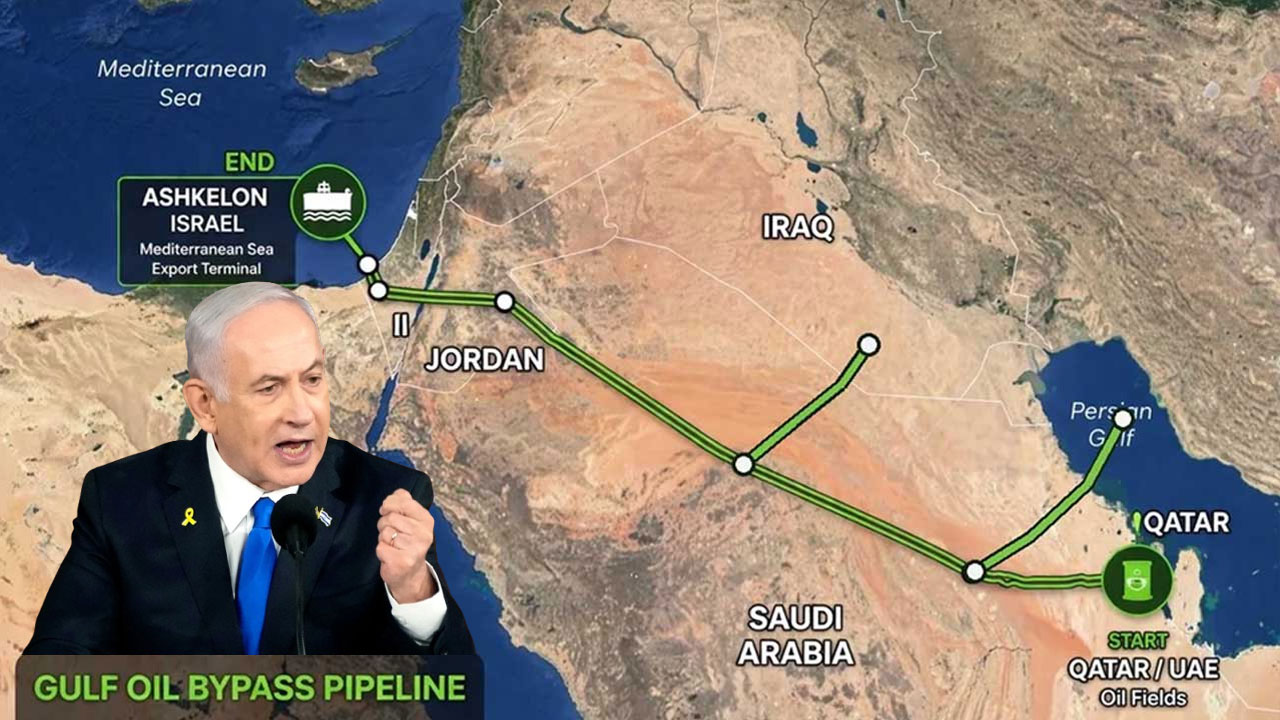
Benjamin Netanyahu proposing Mediterranean pipeline plan for energy security
West Asia: Israeli Prime Minister Benjamin Netanyahu has introduced a strategic proposal aimed at strengthening global energy security amid rising geopolitical tensions in West Asia. The plan centers on the development of a Mediterranean pipeline designed to reduce reliance on vulnerable maritime routes, particularly the Strait of Hormuz.
The proposed initiative envisions transporting oil and natural gas from Gulf nations to the Mediterranean coast through Israeli territory. By establishing a land-based energy corridor, the project seeks to provide a safer and more stable alternative to existing sea routes, which have increasingly come under threat due to regional instability.
This proposal follows repeated warnings from Iran regarding the potential restriction or closure of the Strait of Hormuz. As one of the world’s most critical oil transit passages, the strait handles nearly 20 percent of global oil supply, making any disruption a significant concern for international markets.
According to Netanyahu, the Mediterranean pipeline would enhance energy transport security while also reducing delivery time and operational costs. The initiative is expected to mitigate risks linked to maritime attacks, which have risen amid ongoing tensions in the region.
Beyond logistical advantages, the project could strengthen economic collaboration between Israel and several Arab nations. It also offers a strategic alternative for European countries seeking to diversify their energy sources following disruptions associated with the Russia-Ukraine War.
Overall, the Mediterranean pipeline proposal reflects a broader effort to reshape global energy supply routes while addressing security challenges in one of the world’s most vital oil transit regions.









Post a comment