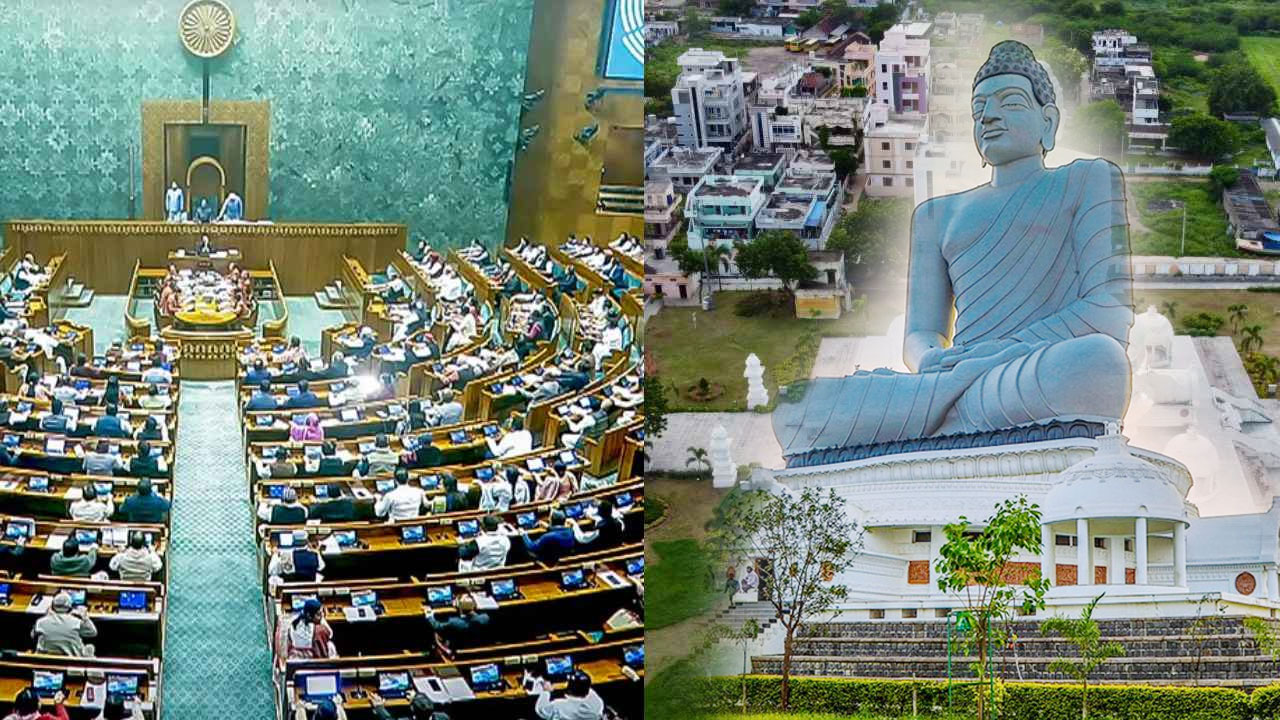
Amaravati declared sole capital after Lok Sabha passes AP Bill 2026
In a significant legislative development, the Andhra Pradesh Reorganisation (Amendment) Bill, 2026 has been passed in the Lok Sabha, officially designating Amaravati as the sole capital of Andhra Pradesh.
Clarity on Capital Status
The amendment provides long-awaited clarity regarding the state’s capital by explicitly naming Amaravati as its permanent administrative headquarters. This resolves the ambiguity left in the Andhra Pradesh Reorganisation Act, 2014, which had only referred to the establishment of a “new capital” without specifying a location.
With this legislative move:
- Amaravati gains formal legal recognition as the capital
- The multi-capital framework is effectively discontinued
- Governance is expected to become more centralized and streamlined
- End of the Three-Capital Proposal
The decision effectively concludes the prolonged debate over the proposed three-capital model, which had suggested:
- Visakhapatnam as the executive capital
- Amaravati as the legislative capital
- Kurnool as the judicial capital
- The passage of the Bill formally sets aside this model, bringing policy certainty after years of political and administrative discussions.
Economic and Development Implications
The announcement is expected to positively impact investor sentiment and accelerate delayed infrastructure projects in Amaravati. Estimates suggest that investments worth nearly ₹56,000 crore could be unlocked as a result of improved policy clarity.
Additionally, the move is likely to:
- Expedite urban infrastructure development
- Enhance administrative efficiency
- Attract both domestic and international investments
- Implications for the State
The legislation marks a decisive shift in Andhra Pradesh’s governance and development strategy. By establishing a single capital, authorities aim to ensure administrative stability and long-term planning consistency.
It also reflects alignment between the central and state governments on capital development priorities.








Post a comment